
Read the Colonial Heights Owner-of-Record Entry
The City Assessor maintains more than names. Its records cover ownership changes, property descriptions, building characteristics, valuation, and parcel maps. When you open a parcel in CRS, jot down the parcel ID and the legal description. Keep those next to the owner name. Those identifiers are what tie the entry to the recorded deed.
| Owner name | Current name in the Assessor's ownership record; exact label not captured |
|---|---|
| Entity or vesting | Check the recorded deed for trust, LLC, estate, or co-owner language |
| Mailing address | Address for tax notices; it may differ from the parcel's situs |
| Situs address | Physical location tied to the parcel |
| Deed reference | Confirm the latest transfer in the Clerk's grantor-grantee index |
| Update timing | Assessor says transfers arrive weekly from the Clerk |
The owner of record is not always the occupant. A mailing address may point to a separate home or a business, and the legal owner can be a trust or an entity rather than a person. Treat the address as a public-record detail, not an invitation for repeated contact.
The Colonial Heights Roll Can Lag a Sale
The Assessor receives ownership transfers from the Circuit Court Clerk on a weekly basis. Because of that cycle, the public records can trail a newly recorded deed. The lag runs about a week. For a recent closing, the deed with the latest recording date is the more current transfer record. The assessor roll then catches up through its normal weekly feed.
That short lag is not a missing transfer. Hold onto the instrument number or book/page, the grantee name, and the parcel description. The owner field may still show no change after the update cycle. If so, contact the Assessor with the recorded reference so the office can review its land-book entry.
The City Assessor FAQ explains the weekly ownership update. It covers the rule on two different names. A recent buyer can see them across Colonial Heights property records.
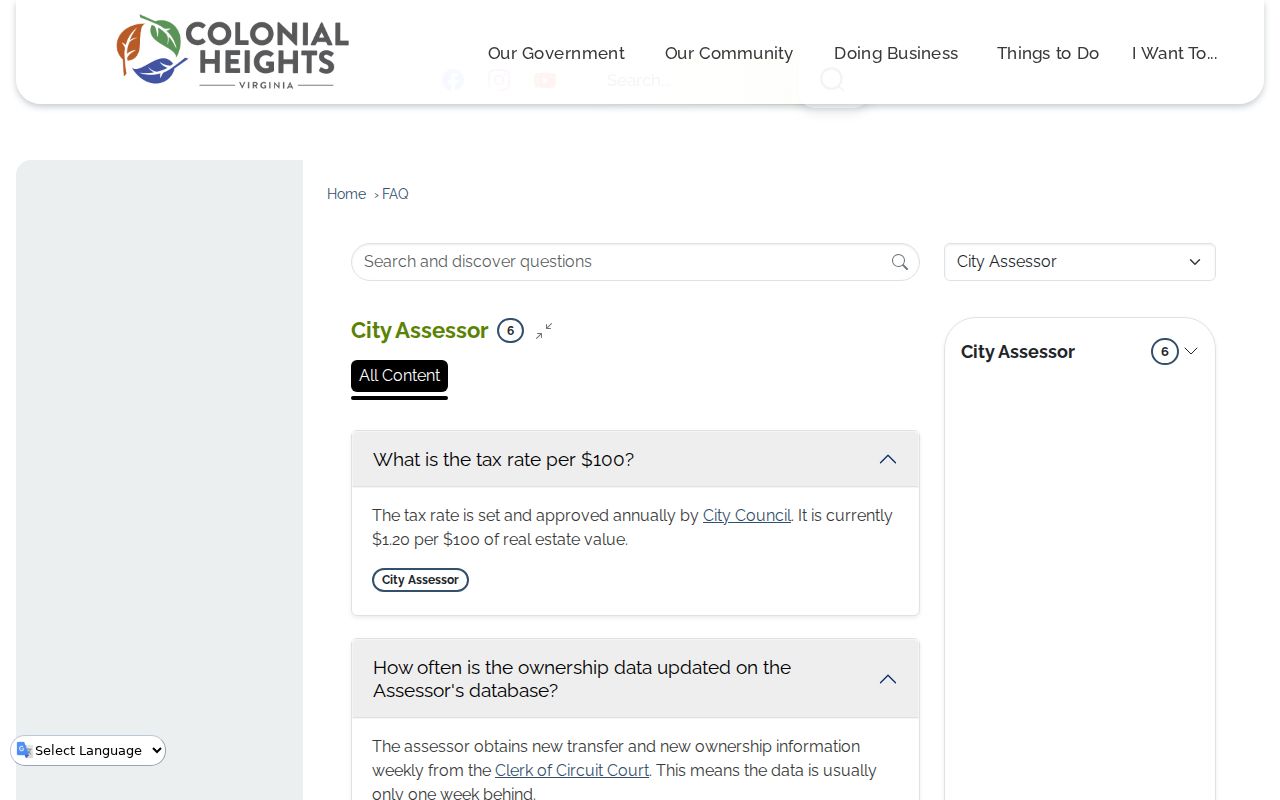
Rely on the FAQ for the normal cycle and on the latest recorded instrument for a fresh transfer.
Newest Deed and the Public Record Room
For a current owner question, the deed is the recorded transaction that actually changed title. Colonial Heights local land records begin February 1, 1961. The Circuit Court record room sits at 550 Boulevard. It is open Monday through Friday, 8 a.m. to 4 p.m., with public terminal access. The Clerk does not give recording information by phone or email.
Virginia SRA may provide an index where the Clerk enables it. But viewing images takes a local subscription. If the newest image is not available remotely, use the counter or request a copy in writing. This step confirms the transfer. The full legal chain still belongs to professional title work.
The City record-room page states the access rules and coverage. It is the official place to confirm the current owner's deed.
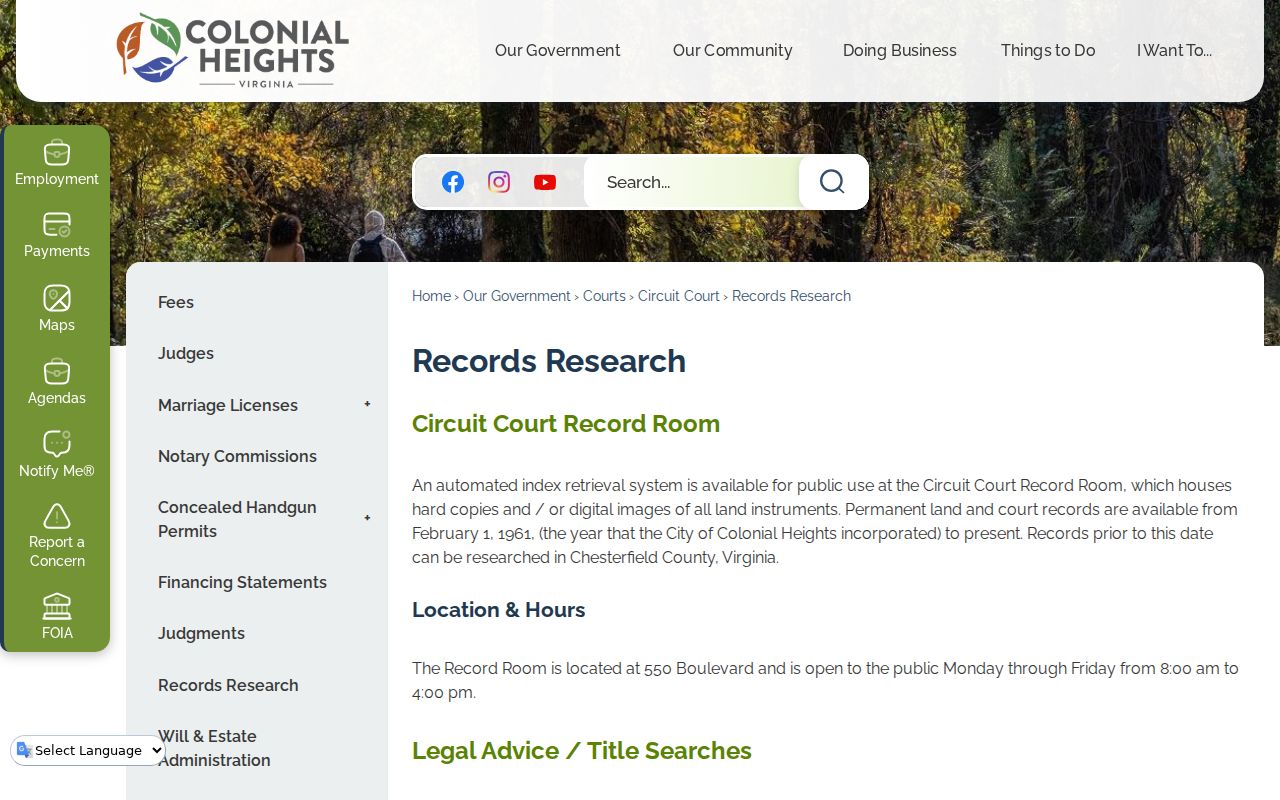
Use Chesterfield County for a deed before the City record series begins.
Tax-Year Owner on January 1
The City assesses real property for the full year. It does so in the name of the January 1 owner. That tax-year name can differ from the current owner after a later sale. The settlement attorney arranges the year's tax proration. Meanwhile, the most recent deed establishes the later transfer date.
A tax bill or tax record may name someone else. Compare the tax year with the deed recording date. The bill can still be correct for the City's annual assessment. Ownership may simply have changed later in the year. Billing & Collections confirms payment status; the Circuit Court deed answers the current transfer question.
Keep the tax roll, the tax bill, and the deed in their proper time context. A tax bill is not a title certificate.
Trust, Estate, or LLC as Current Owner
The grantee on the newest deed may be a trust, an estate, a trustee, an executor, or a business entity. Copy the vesting language exactly as it appears in the instrument. An LLC or corporation needs one more step. Virginia SCC CIS can confirm its legal name, status, registered office and agent. It also shows available filings. The agent is a business contact, not proof of who personally owns the property.
A trust or probate transfer may take reading the deed and related court records together. The Circuit Court Clerk holds wills and probate files. The assessor's owner name is only a compact roll entry. Use the recorded instrument whenever the form of ownership matters.
The official Virginia SCC CIS confirms a business grantee's details. This applies when the current owner is an LLC or corporation.
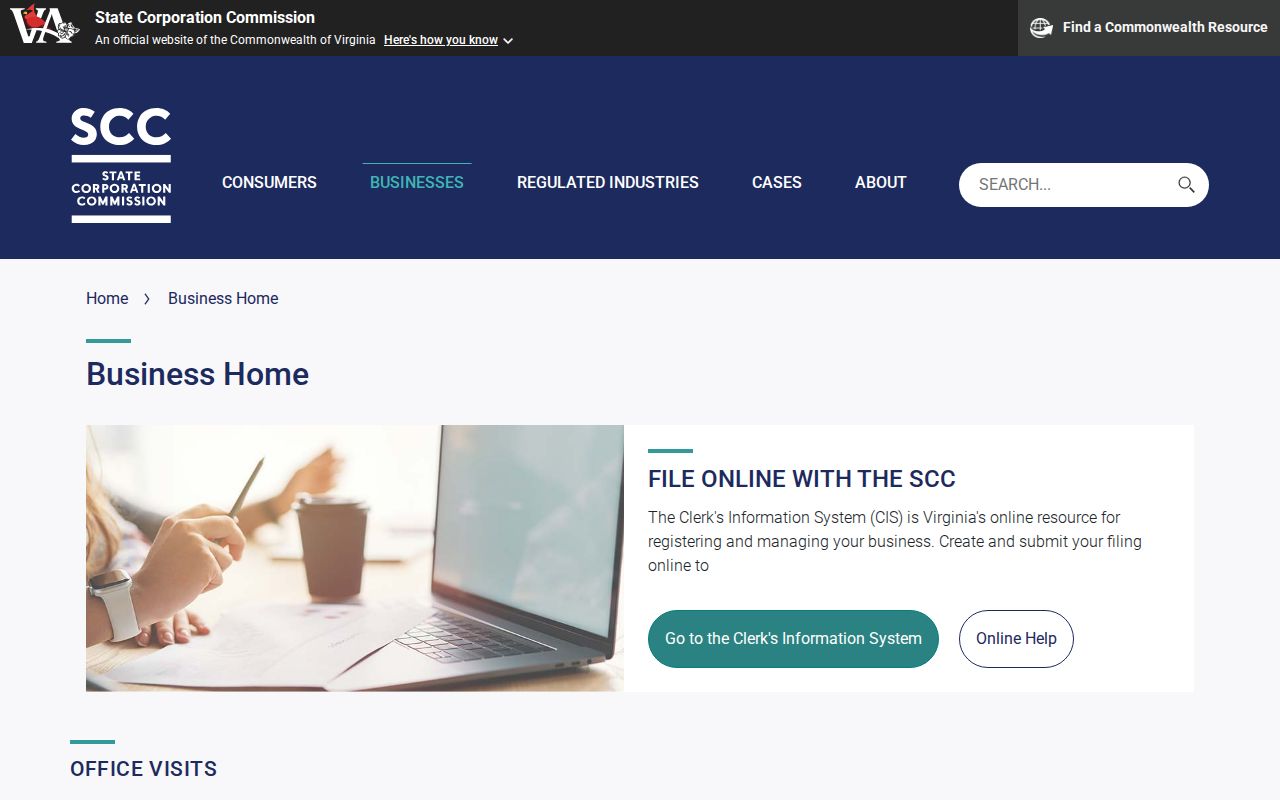
That entity listing is separate from the land record. The deed is what connects the named company to the Colonial Heights parcel. An entity lookup never substitutes for a parcel deed. The recorded property instrument ties the entity name to the land.
Address and Parcel Keep the Owner Match Exact
A street address alone can mislead. One address may cover a multi-unit property, and older subdivisions sometimes renumber streets entirely. The parcel ID is the sturdier cross-reference. Colonial Heights permit forms accept a parcel ID whenever an address has not been assigned, and the same number ties the assessor, permit, GIS, and deed records together. The CRS search screen changes its field labels from time to time, so confirm how its search modes work rather than assuming they all behave alike.
Compare the situs address against the mailing address and the legal description before settling anything. Two records anchor the match: the assessor's land book and the Circuit Court instrument. Each links a named owner to a specific parcel. A GIS line only confirms location.
The broader owner lookup method starts with the same address-to-parcel route and shows how these sources fit together.
Confirm the Current Colonial Heights Owner
Start with the City tax roll. That locates the parcel. Then check the Clerk's index for the latest recorded conveyance. The deed should line up. Its grantee, recording date, and legal description must all point to the same land. When they do not, look for a name variant, an entity, or a lot combination. It could also be a recent update still moving through the weekly assessor feed.
- Open the City's CRS link and search by the parcel or address.
- Copy the owner name and legal description shown by the Assessor.
- Search the Clerk's index for the latest deed into that owner and compare the parcel language.
- For a company name, use Virginia SCC CIS to verify the entity name and status.
- Owner of record
- The name maintained in the current property record.
- Vesting
- The way the deed names the person, co-owners, trust, or entity receiving title.
- Registered agent
- A filed contact for a business, not necessarily the parcel owner.
When the CRS Owner Field Is Unclear
The City tracks ownership through its CRS parcel cards. Its text pages do not publish a full field inventory, though. The live card may not expose a deed reference. An owner name can also come through unclear. In that case, take the parcel description straight to the Clerk's grantor-grantee index.
A written copy request works well. Ask for grantor, grantee, document type, recording date, and the book/page or instrument number. Copies run 50 cents per page, with $2 more for a certified copy. Enclose payment and a stamped return envelope. The record room also offers a public counter if the document needs locating first.
For a single deed's mechanics, the Colonial Heights deed-records page walks through the index and copy route.
Mailing Address and Owner Privacy
A mailing address tells you where the City sends tax notices. It is not the property's location, and it may not be anyone's residence. Keep situs, mailing address, and legal description separate. Virginia's Address Confidentiality Program and other protected-record rules shield some residential information, so a missing address never proves an owner or parcel is absent.
Lawful use. Use a public mailing address for a legitimate property matter. Do not use owner information to track, threaten, or harass a person, and respect protected-address rules.
Keep a Dated Colonial Heights Owner Snapshot
Save your work when you check a current owner. Record the search date, parcel number, legal description, owner wording, and land-book year. For a recent sale, log the deed's grantor and grantee on their own line. Note the recording date there too. The Assessor pulls changes from the Clerk weekly. A dated result can describe the tax roll accurately even while a new instrument is still in transit.
For a company or estate, preserve the full vesting language. Do not reduce it to a person's name. Check the corporate name in Virginia SCC CIS. Then return to the land instrument and confirm that entity truly connects to the parcel. That habit keeps every Colonial Heights result traceable to its source and date.