
Separate Colonial Heights Property Value Measures
Several value measures can attach to one Colonial Heights parcel. An assessed amount, a deed consideration, and a market estimate each serve a different purpose. Each one lives in a different system. The City confirms its sales-comparison method and posts a current land-book link. Never treat the three as interchangeable.
| Value | What It Is | Where |
|---|---|---|
| Assessed value | City land-book value used in the property-tax calculation | Assessor and current land book |
| Market indication | Sales-comparison estimate described by the Assessor | Assessor; exact CRS label not captured |
| Sale consideration | Amount stated in a recorded transfer when shown | Circuit Court deed image or index detail |
| Land and improvements | Property description and building characteristics are maintained | Assessor; sample card fields unverified |
The Assessor's value supports taxation in Colonial Heights. It may differ from a private sale price because the two are not the same measure or date. The City publishes no value ratio or sample card showing a land and improvement split. Check those fields on the record itself.
Colonial Heights Sales Comparison and Cycle
Most Colonial Heights property is valued through verified sales comparison. General reassessment happens every two years, in even-numbered years. The Assessor FAQ listed January 1, 2022 as the latest effective assessment. That date was current when it was published. The Assessor page now links a 2026 land book effective May 1, 2026.
These dates matter. A land-book amount belongs to a whole assessment cycle of record. A deed price reflects one sale on one date. A recent sale can inform a future assessment. It cannot replace the City's mass valuation process or a private appraisal.
The FAQ explains the City's method and cycle. It offers valuation context rather than one parcel's detail.
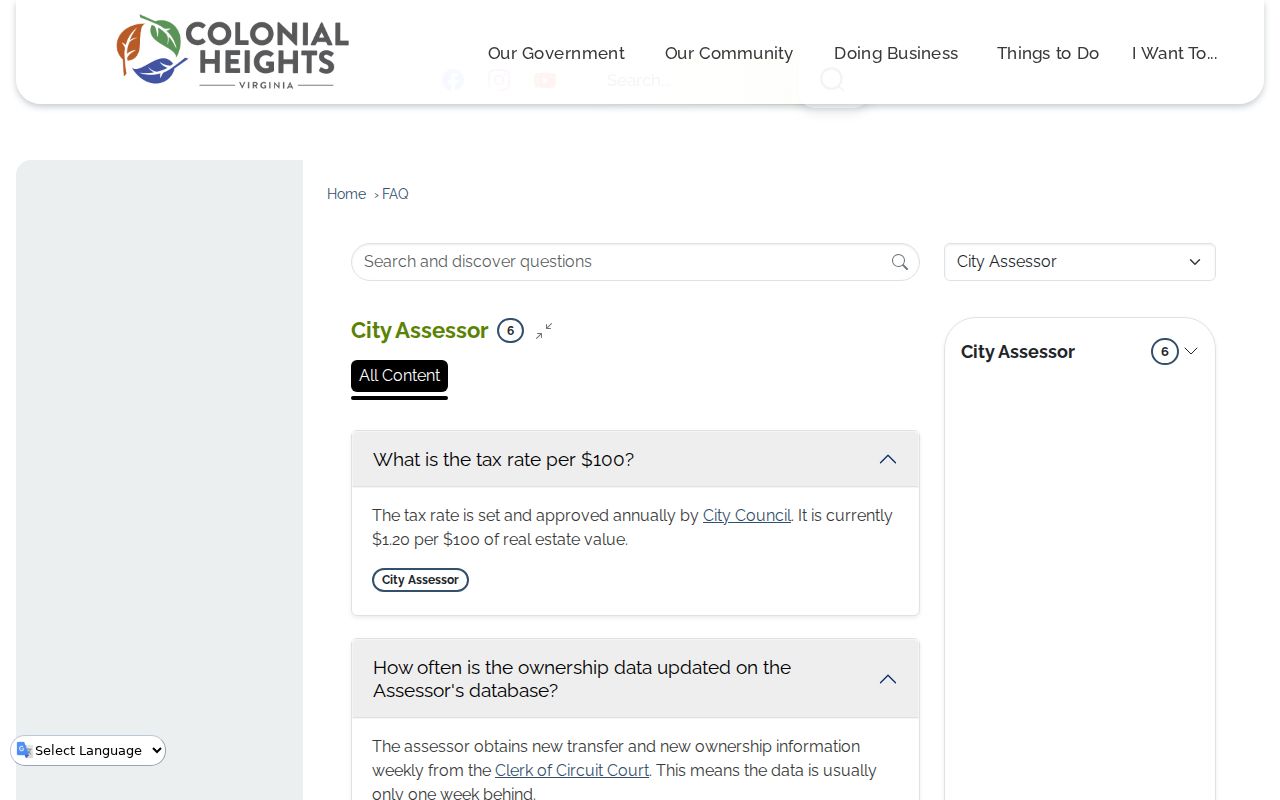
Verify the assessment year on the live land book.
Closed Permits Can Change a Value Record
Closed permits can change a value record. The City says work like an addition, deck, or garage can trigger an updated property value. A notice follows the month after closure. This is one route for change between biennial assessments. The permit's estimated cost is not market value. The application alone does not prove the work was finished either.
Compare the permit closure record with the property description and improvement history whenever a land-book value shifts. The City building permit form accepts a parcel ID when no address exists. It asks for the owner, contractor, work description, square feet, estimated cost, and plans. That tells the assessor what may later be updated. Ask Building Inspections for the retained permit and final status.
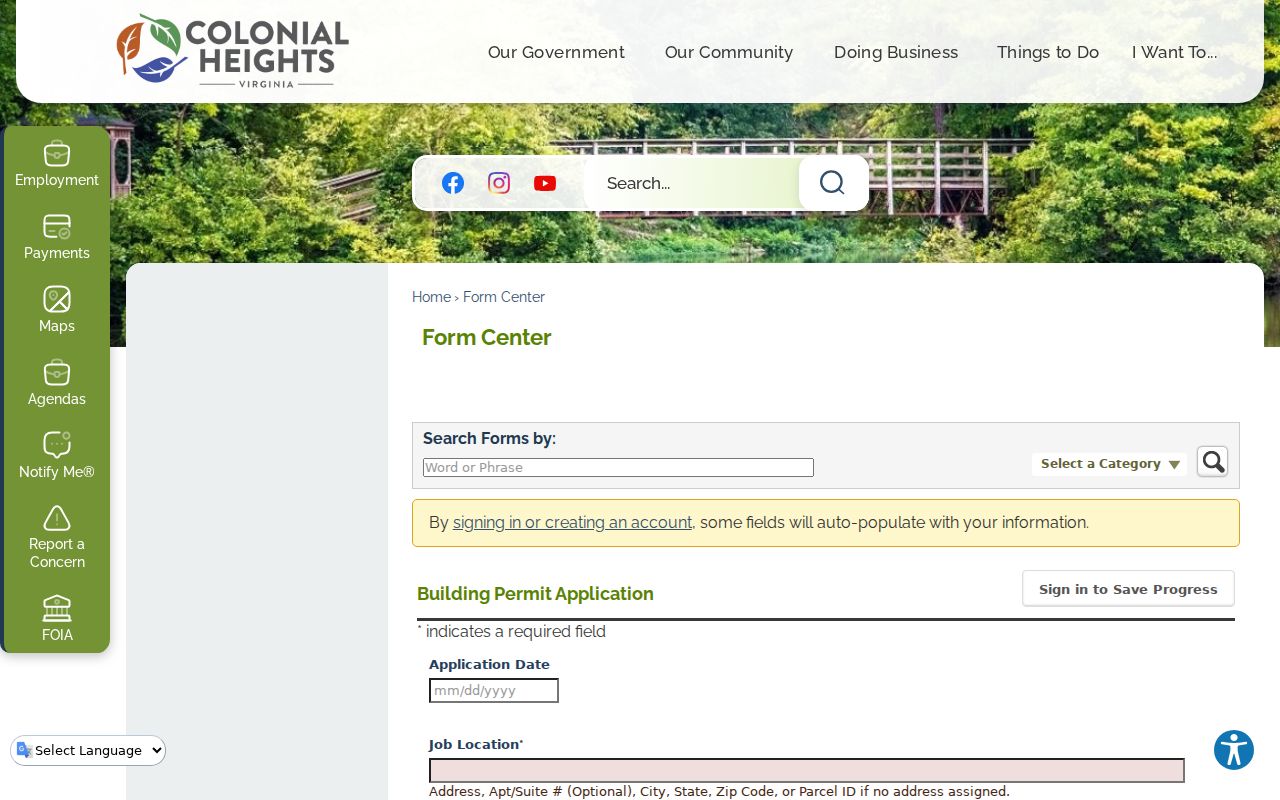
Use the closed permit together with the assessment notice when a building change affects a property's recorded value in Colonial Heights.
Deed Consideration Is a Separate Number
A deed may state the consideration for a transfer. That amount is not the assessor's value. The sale happened on a date, and its terms may not show in a summary. The assessed value reflects the City's valuation cycle, while deed consideration records what the instrument says changed hands.
Pull the latest deed from the Circuit Court Clerk index. Read the image when one is available. The local SRA system may require a subscriber account for images. The public record room is the fallback. Confirm the record shows the price.
Keep sale date, recording date, and assessment year in separate notes. Each one describes a different event.
Find a Colonial Heights Assessed Value
Start at the City Assessor page for a Colonial Heights assessed value. It links both CRS and the 2026 land book. Use a parcel ID when the address is uncertain. Record the tax year shown beside the value, since the CRS card can be slow to load.
- Open the City Assessor page and follow its CRS link with an address, owner, or parcel.
- Copy the assessed value and the assessment year shown by the live record.
- Check the most recent deed for recorded consideration if it is stated in the instrument.
- Ask the Assessor about value fields or history that the public card does not display.
- Assessed value
- The City's land-book value used for local property taxation.
- Market indication
- An estimate based on verified sales comparison, as described by the Assessor.
- Consideration
- The price or value stated in a deed when the instrument reports it.
- Reassessment
- The City's general value review, which occurs biennially in even-numbered years.
Neighborhood History Gives Value Context
Parcel history in Colonial Heights varies sharply from one neighborhood to the next. Chesterfield Highlands sits on a 1916 grid of narrow lots, central alleys, and double-lot homes. Violet Bank includes Colonial Heights Extended and Riverside Park. It took its shape from the Boulevard streetcar corridor and historic covenants. Dunlop Farms grew in sections between the 1950s and 2003. So did the land south of Ellerslie Avenue.
Those patterns change how a parcel reads in the records. A combined Highlands lot is a different record unit than a single original 25-foot parcel. A planned subdivision section may carry its own plat and permit history. Find the neighborhood first. Pull the right plat. Then weigh the current land-book parcel against the recorded deed and sale.
The Assessor applies a verified sales-comparison approach to most properties. The office does not publish the comparable-sale list or weighting behind any individual card. Do not treat one nearby price as equivalent yet. Compare lot configuration, subdivision section, building traits, and sale timing. The City offers a warning too. Closing out an improvement permit can trigger a value notice afterward. The Highlands district page documents the original lot pattern. Its image shows why parcel history matters when you interpret a value.
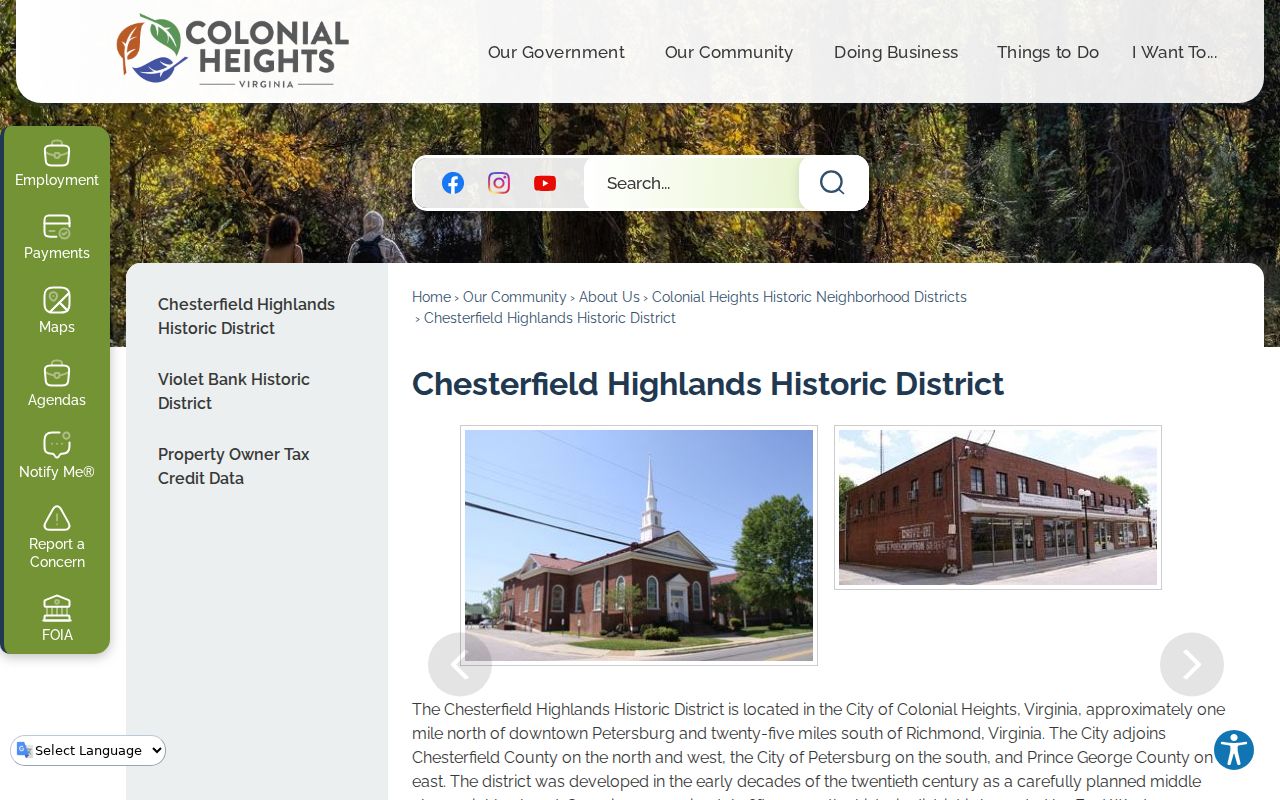
Historic maps supply the parcel context; the Assessor's land book holds the current assessed amount.
Tax-Year Owner and Assessed Value
Colonial Heights assesses real property each year. The assessment runs in the name of the owner of record on January 1. A deed recorded later changes the actual owner. It does not change the tax-year label. That label matters when you trace a tax roll entry across a sale.
The City posts a real-estate rate of $1.20 per $100 of value. The rate is a tax setting, not a market estimate. It also says nothing about a parcel's bill balance. For amounts due, deadlines, and proration at a sale, the Colonial Heights property-tax page explains the separate bill rules. Here the focus stays on meaning. That means assessed amount versus sale consideration versus a professional market appraisal.
What the Colonial Heights Value Does Not Tell You
A Colonial Heights assessed value exists for taxation. It does not state what a buyer will pay today. It is not an appraisal or a survey. It is not a title report or a promise about a future sale. The City leans on verified sales comparison and updates values on a biennial cycle. Permit-related updates are possible between general reassessments.
The published rate is $1.20 per $100 of real-estate value. For scale only, a hypothetical taxable value of $250,000 times that rate yields $3,000 before account-specific changes. No calculation replaces the bill. Exemptions and the applicable assessment shape what a parcel actually owes. Tax-year ownership and payment history shape it as well.
Dates matter as much as the amount. General reassessment falls in even-numbered years, per the Assessor. The FAQ lists January 1, 2022 as the effective date named there. The Assessor links a 2026 land book effective May 1, 2026. A closed permit for an addition, deck, or garage can bring an updated value notice the following month. Check the effective year printed on the notice before comparing values across time.
Value versus price. The assessed amount is a tax record, not an appraisal of current market value. For a sale, loan, or other valuation decision, obtain an independent licensed appraisal.