
What Colonial Heights Deed Records Contain
Land instruments recorded from February 1, 1961 forward sit with the Circuit Court Clerk. A deed records a conveyance. Other instruments explain debt, release, court claims, or the shape of a subdivision plat. Read Colonial Heights deed records by document type and legal description. Never search by the word "deed" alone.
| Deed Type | What It Does | Common Use |
|---|---|---|
| Deed | Transfers a stated interest in land | Trace a sale or estate conveyance |
| Deed of trust | Records a loan security interest | Review financing and later release |
| Release or satisfaction | Shows a recorded claim was released | Match to the earlier deed of trust |
| Plat | Maps lots, streets, and subdivision lines | Understand a split or original lot |
| Judgment or lien | Records a claim or court-related notice | Check the instrument and any release |
A recorded instrument shows what was filed, nothing more. That is its whole job. Its existence alone does not prove the absence of later claims or unrecorded interests. Pair each deed with the legal description, related releases, and any later conveyance. The clerk indexes records but does not render a title opinion.
The Colonial Heights Record Series Starts in 1961
The local permanent land series begins February 1, 1961. Any deed made before that date belongs in Chesterfield County's record run. A modern tax bill may still carry a Colonial Heights address. Follow the latest clerk instrument backward. Use its previous recording reference to cross the jurisdiction line. This is a coverage boundary, not a gap in the chain. The Circuit Court record room at 550 Boulevard is open Monday through Friday. Hours run 8 a.m. to 4 p.m. Public terminals there provide an automated index plus hard-copy and digital land images. Staff can help a patron navigate the index. They cannot perform a title search or explain a deed's legal effect, so plan accordingly. The official record-room page describes local coverage and copy rules. That helps when a search reaches into older Chesterfield books.
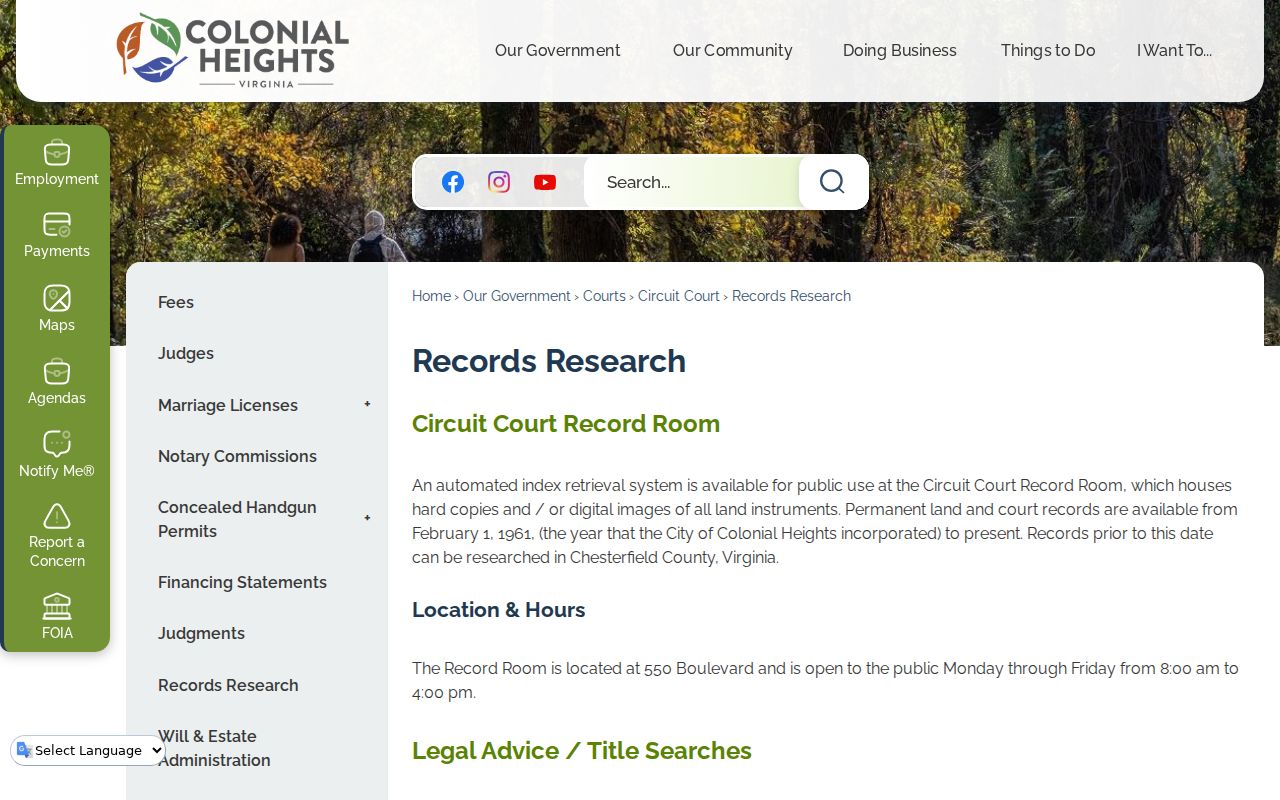
For pre-1961 links, search both offices and compare references.
What a Clerk Index Entry Should Capture
The public landing page does not publish the live index's exact field labels, dropdown choices, or a sample result. At a terminal or through an SRA result, note the details that connect one instrument to the next. Preserve each label as the system displays it. The table below is a checklist only. No field is guaranteed in every online result.
| Parties | Grantor, grantee, and party role |
|---|---|
| Instrument | Document type and recording date |
| Locator | Instrument number or book and page |
| Land description | Legal description and parcel reference, if shown |
| Image access | Whether an image opens or requires a subscription |
The deed image may hold details the index lacks. Use a name and parcel together, so a same-name result never pulls the chain onto a different property.
Virginia SRA Index Versus Deed Image
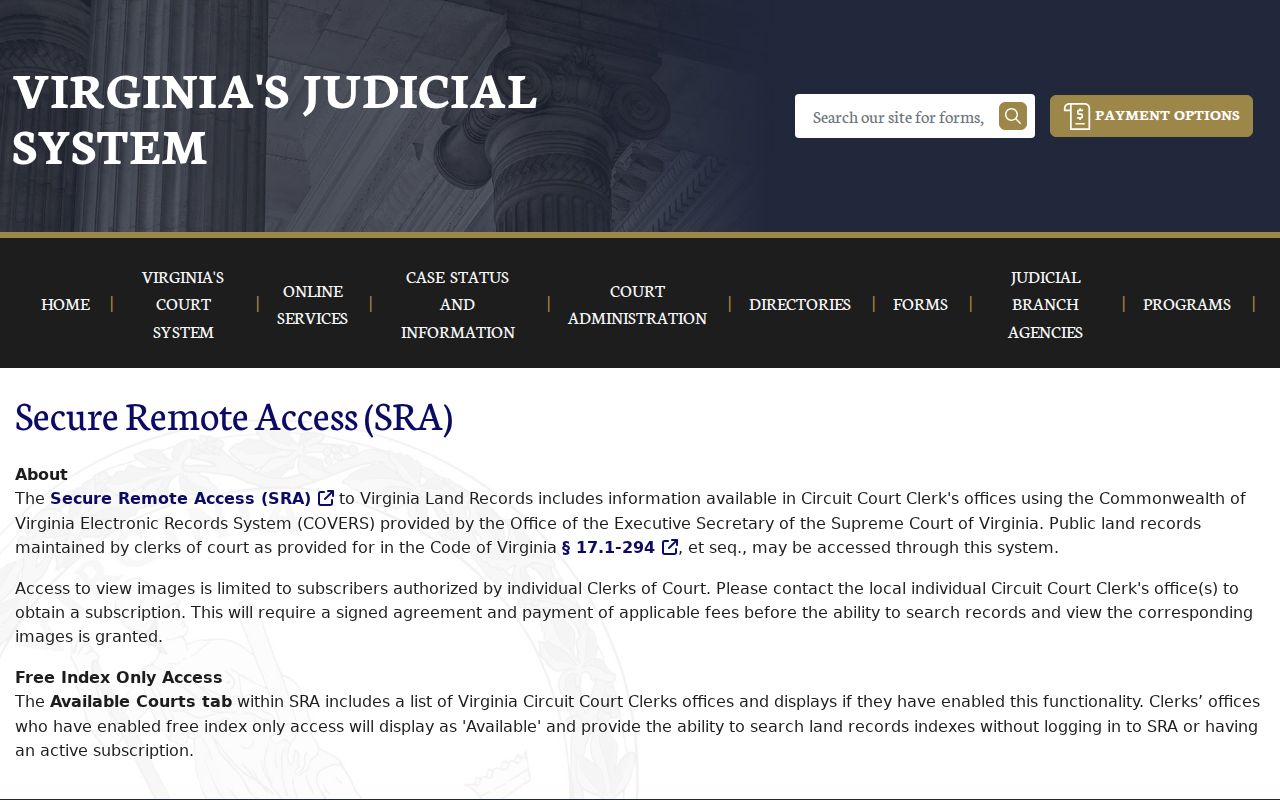
Virginia's Secure Remote Access system separates index-only access from images. A clerk may allow a free index. Images may be restricted to users with a local clerk-authorized subscription. Colonial Heights has its own SRA landing page for remote land-record access. The public record room remains the fallback. That applies when a subscriber image is unavailable or a historical book needs review. Never treat a search result title as the instrument itself. Open the image when available. Verify the parties and legal description, and record the complete reference. If access is blocked, note the index details and request a copy from the Clerk. You can also inspect it at the public counter. The Colonial Heights SRA landing page is the local subscriber route for remote land-record access.
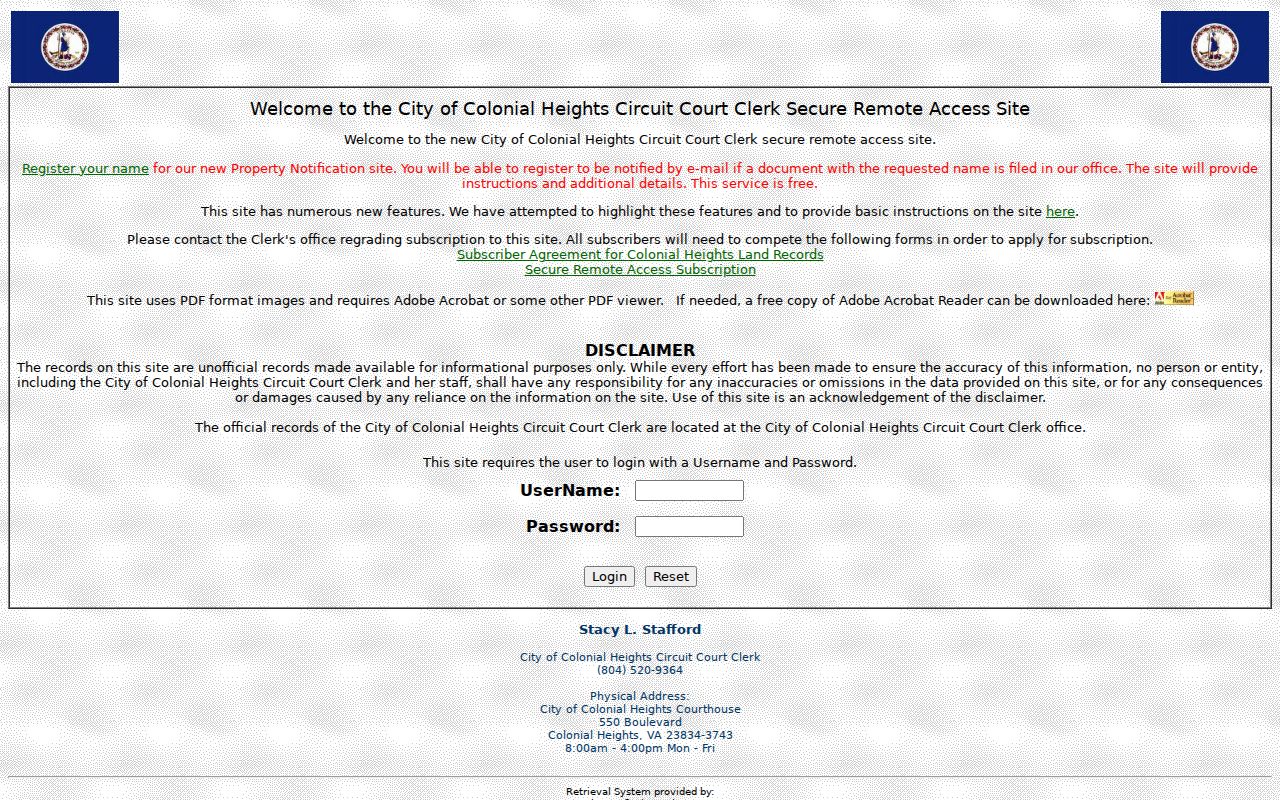
Image permissions depend on the Clerk's settings. If an image is unavailable online, take the index reference to the record room. The Virginia SRA overview explains this access model and the statewide distinction between index and image access.
Check live Colonial Heights SRA subscription terms before remote viewing.
Walk the Colonial Heights Party Index
The City record room uses an automated index retrieval system. Its public landing page does not publish exact search-field labels or a sample result, so verify live options at the terminal or through the authorized SRA portal. One concept stays reliable: the party chain. A grantee receives an interest. That party may later appear as a grantor.
- Start with the current assessor owner and legal description, then find the newest deed into that owner.
- Write down the grantor, grantee, document type, recording date, and instrument or book/page reference.
- Search the grantor as an earlier grantee, checking both the name and legal description.
- Continue until the chain crosses February 1, 1961, then use Chesterfield County for the earlier land record.
- Grantor
- The party named as transferring an interest.
- Grantee
- The party named as receiving an interest.
- Chain of title
- The sequence of recorded transfers for a parcel.
- Book/page or instrument number
- A reference used to locate a filed document; record the exact format shown by the index.
Deeds of Trust, Releases, and Judgments
A deed transfers an interest in land. A deed of trust records a security interest tied to a loan. A later release or satisfaction may show the claim was discharged. Judgments, financing statements, plats, and probate-related instruments can matter to a property file too. Search by party names and the property description. Then check for later documents referring to the same transaction. For a foreclosure or lien question, the land index and the court case file are separate sources, but they are related. Virginia's case-status portal can help locate a court matter. The recorded instrument and local file supply the property-specific details. Use the locality filter where available and confirm the file with the Clerk. The Virginia case-status portal presents statewide and locality search options.
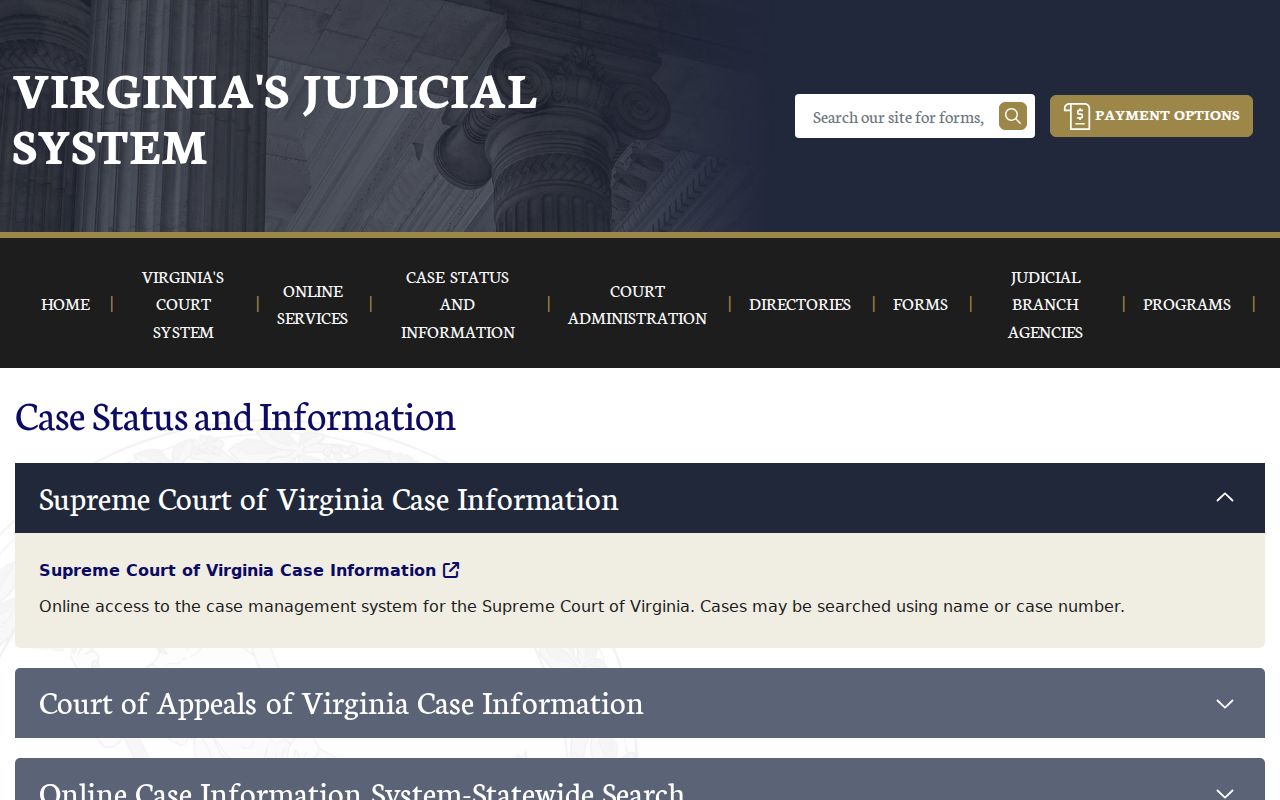
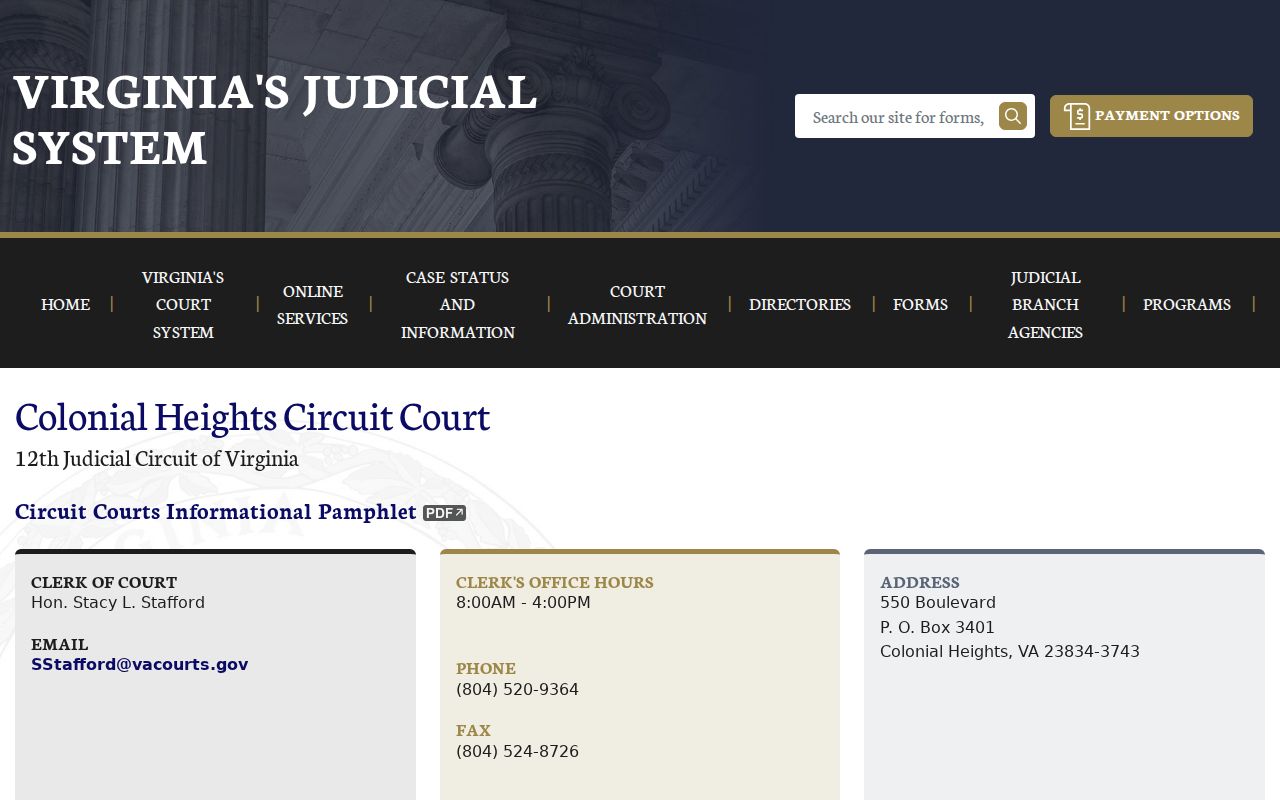
A case result points to court activity. It does not replace a deed index, judgment instrument, or clerk-certified copy. The Colonial Heights Circuit Court page gives local clerk contact and court context.
Use the case portal as an index lead. Then inspect the local file or recorded instrument for the property description.
Subdivision Plats Explain Old Deed Language
Old deeds often skip street numbers entirely. A legal description in Colonial Heights may instead name a subdivision, a lot, a block, an alley, or a right of way. Chesterfield Highlands is a good example. Its 1916 plat laid out a grid of 25-foot lots with depths near 100 to 120 feet and alleys running down the middle. Many homes there sit on double lots. One modern parcel can therefore trace back to several original lots in the plat.
Violet Bank records tell a similar story. Deeds there point to Colonial Heights Extended and Riverside Park, both carved from the old Violet Bank Farm. The streetcar corridor and old deed covenants add color. But the recorded plat, plus later conveyances, is what fixes the parcel. Take the subdivision named in the deed, find its map, and compare the lots against the deed's own description.
Plats also bridge deed records and former-owner research. Each transfer in a chain should connect to the same land, even when the street address has changed over the years.
Written Copy Requests and Certified Pages
Plain pages run 50 cents each. Certification adds $2 per document. The Clerk wants payment up front by cash, check, or money order, plus a stamped return envelope. List the grantor and grantee, the document type, and the recording date. Add the book/page or document number when known. The written-request route takes no credit or debit cards.
Without an exact reference, start at the public counter or the authorized SRA to pin down the index entry. A tight request finds the right deed record faster than a sweeping demand for everything filed under one name. Certification proves the copy is genuine. It does not certify clear title.
For a deeper chain, see the former-owner search method, which walks each grantor backward as a prior grantee.
Make a Colonial Heights Copy Request Traceable
Copy the grantor and grantee exactly as indexed. Include the document type too. Add the recording date and the book/page or instrument number. A parcel ID or full legal description keeps a same-name deed from being confused with another.
Mailed copies need advance payment. The Clerk also asks for a stamped return envelope and accepts cash, check, or money order on this route. An incomplete reference points to the public record room. The Clerk does not search recording details by phone or email.
A Virginia FOIA request can seek an identifiable public record held by an office. It cannot force staff to build a title abstract or trace every transfer for a person. Send deed, tax, and permit requests to separate custodians.
Request a Colonial Heights Deed Copy
The public record room sits at 550 Boulevard. It is open Monday through Friday from 8 a.m. to 4 p.m. Drop in when an index entry or deed image needs in-person review. Recording information is not given by phone or email. Remote images may come through the local SRA subscription. Access depends on the Clerk's settings, though. A written request works when the reference is known.
Recorded, not guaranteed. The Colonial Heights deed index shows filings, not a legal conclusion that title is clear. An attorney or title company must review the chain and interests that may not appear in a simple index search.