
Find Who Owns a Colonial Heights Property
Take the assessor-to-deed route. The City links to the CRS Real Estate Records Search. It supports an address, owner, or parcel query. Pull up the parcel card. Match the result against the legal description, then trace the latest conveyance through the Circuit Court Clerk's grantor-grantee index. Field names and result details live in the portal itself, so confirm them there.
- Search the address or parcel through the Assessor's CRS link and note the owner and legal description shown.
- Use the owner name and property description to find the latest deed in the Circuit Court Clerk index.
- If a business holds title, check its legal name in the Virginia SCC Clerk's Information System.
- Compare situs and mailing address, and use a public mailing address only for a lawful property matter.
Weekly Ownership Updates in Colonial Heights
The City Assessor receives transfer information from the Circuit Court Clerk once a week. That sets the normal lag at about a week. It runs between a deed's recording and the owner name appearing in the assessment record. A recent sale explains a stale name. Find the recorded deed first, and the assessor page's prior owner makes sense. The Assessor's CRS route handles the usual address, owner, or parcel lookup. The City page links to CRS and the current land book. If the owner field stays stale past the regular update, contact the Assessor. Include the deed's recording reference and parcel description. The City Assessor FAQ describes the weekly transfer feed. It also states the City's own policy on the refresh cycle.
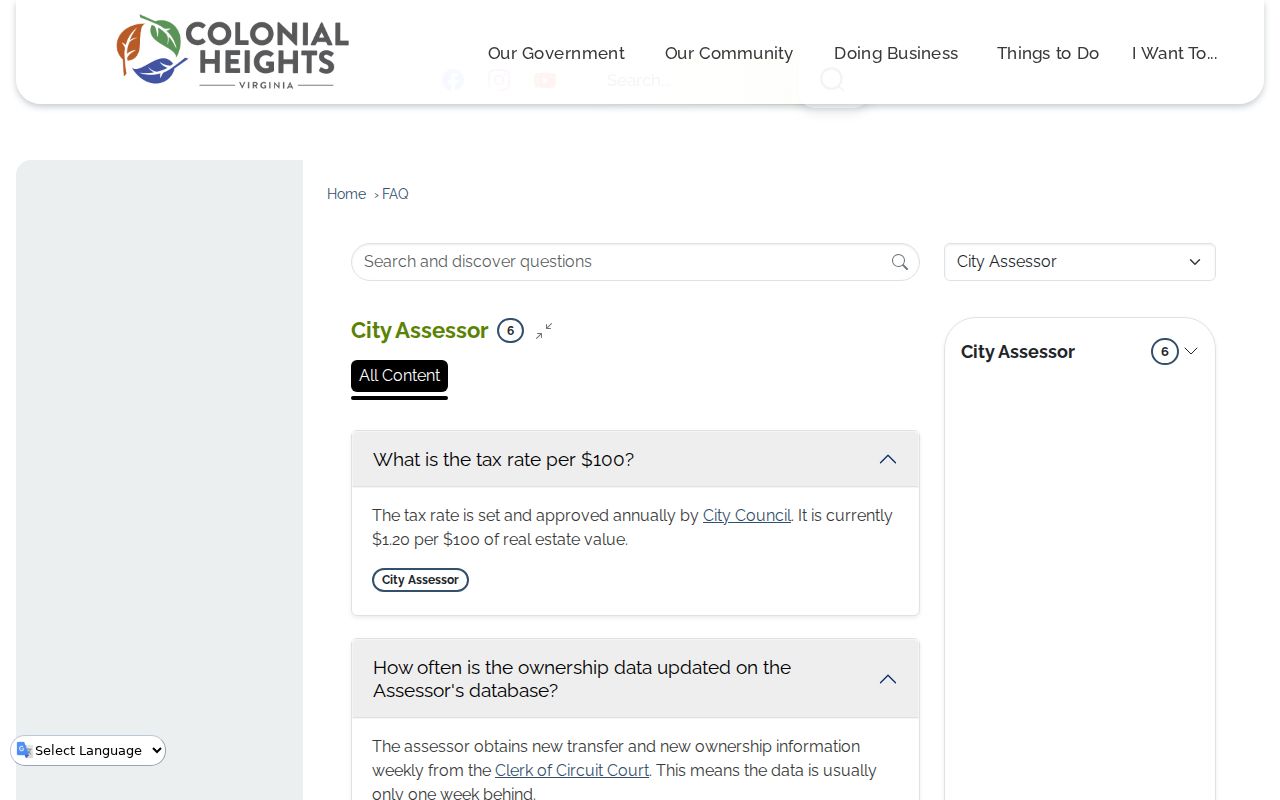
Rely on the FAQ for the normal refresh cycle, and on the newest recorded deed for a transfer that just closed.
Address, Parcel, and Mailing Name
Search by the property's physical address when you know it, and keep the situs address separate from the owner's mailing address. The situs locates the land. The mailing address routes tax notices, and it can be somewhere else entirely. A parcel ID is often the cleanest link between the assessor, a permit form, and the GIS map. The City building-permit form accepts a parcel ID when no address has been assigned yet. Its zoning form likewise asks for the parcel, address, owner name, and mailing details. Old street numbers cause trouble. When one no longer matches, bridge the records with the legal description and subdivision name. Colonial Heights public offices use ZIP 23834, but a ZIP or mailing city never settles legal jurisdiction. The land book and deed description answer that question.
Use the Latest Recorded Deed to Confirm
The assessor roll is a clue to the current owner. The Clerk's newest deed is the recorded transfer to measure it against. Search the grantor and grantee names, then verify the legal description. The local record room holds Colonial Heights land instruments from February 1, 1961 to present. Anything older sits in Chesterfield County's record series. The Clerk gives no recording information by phone or email. So use the public counter, the local SRA subscription, or a written copy request. Virginia SRA may offer index-only access, while images require the Clerk-authorized subscription. A legal conclusion about the chain belongs with a title company or attorney. The current-owner record covers how to read the latest owner-of-record result. Earlier transfers need a separate chain search.
Sources That Name a Colonial Heights Owner
The assessor roll is the simplest starting point for the owner-of-record name. The newest deed is the recorded evidence of the transfer itself. A GIS parcel helps match the site to the right land-book record. The map alone is not an ownership document. A state entity record can explain an LLC name when one appears. The deed remains the true property source.
| Source | Owner Info It Gives | Access |
|---|---|---|
| Assessor / land book | Owner tracking, parcel description, building traits, value work | CRS link and Assessor page |
| Circuit Court deed index | Grantor, grantee, and recorded transfer reference | Record room or clerk-authorized SRA access |
| Virginia SCC CIS | Legal business name, status, registered office and agent | Public entity search; some services may require a fee |
| GIS parcel map | Parcel location and geographic context | City map gallery; not proof of title |
An owner of record is the party named in a public property record. The occupant can be someone else, and the mailing address may fall outside the City. Ownership may also rest with a trust, an estate, or an LLC rather than an individual.
When an LLC or Trust Holds the Parcel
A deed's grantee is not always a person. It can name a trust, an estate, a trustee, an executor, or a company. Copy that name exactly as the clerk recorded it. The grantee can be a business entity. Run the name through the Virginia SCC Clerk's Information System. That registry lists the legal entity name and its status. It also gives the registered office, the agent, and the filings. Keep one point in mind. A registered agent is a contact point, not the owner.
Trusts and estates take more care. Use the deed's full vesting language. Check probate or court records when the transfer came through an estate. The Circuit Court Clerk keeps wills and probate files alongside the land instruments. Never guess the people behind a trust from a mailing name alone.
The recorded instrument and the legal description still anchor the parcel. State business records explain an entity name. They do not replace the deed.
For a company, use the official Virginia SCC Clerk's Information System. An entity result can confirm a legal name, status, registered office, or agent. It will not show who personally owns the Colonial Heights real estate.
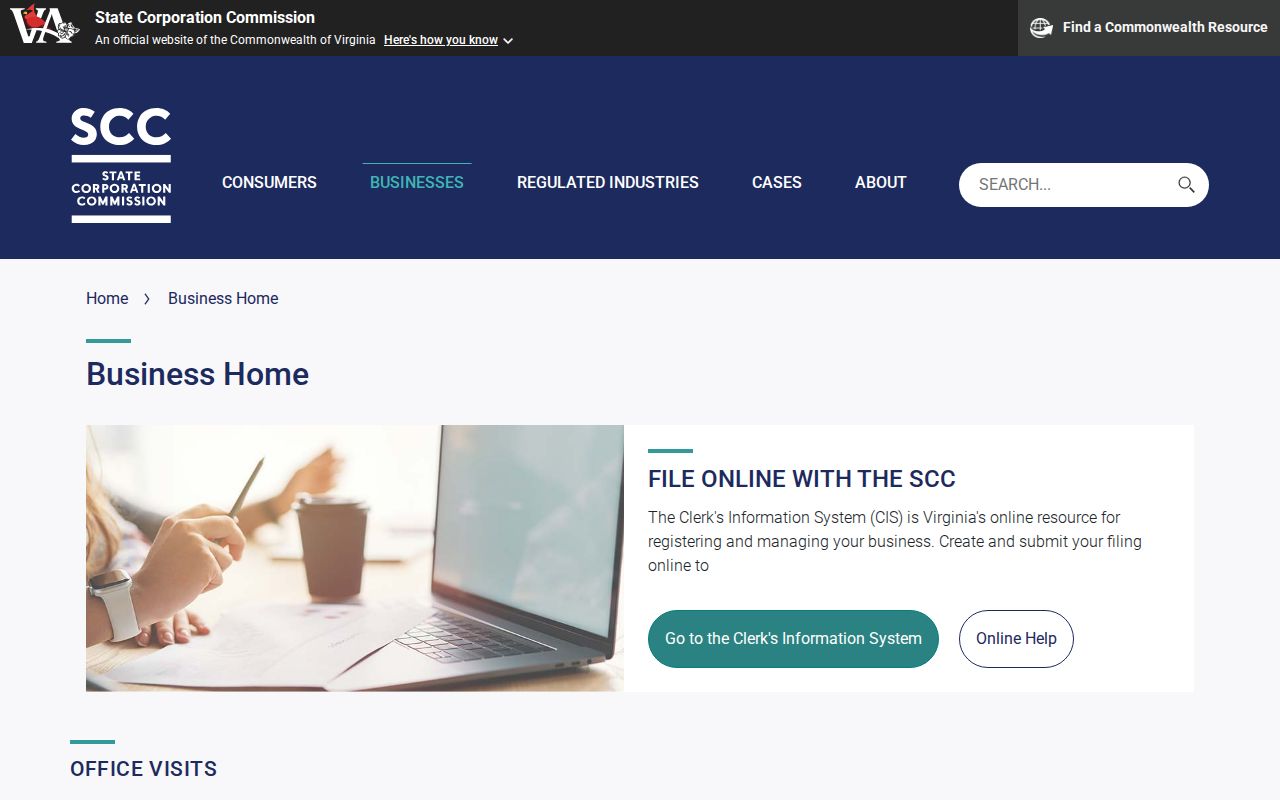
After identifying the business, return to the Clerk's recorded deed. Confirm that the entity is the grantee for the exact parcel you are researching.
Privacy and Protected Owner Addresses
Public property data can be incomplete or restricted. Virginia's Address Confidentiality Program gives eligible participants a designated mailing address. Other laws limit certain protected records. A missing street address or alternate mail address does not mean a parcel has no owner. Follow the data shown by the official custodian. Avoid republishing details that are protected or unneeded.
A lawful owner lookup helps with a deed, boundary, tax, or house-history question. Never use it to track a person. Do not repeatedly contact a household or expose a protected address. When an owner has a safety concern, ask the custodian about the applicable redaction or program route.
Contact the Clerk When CRS Is Incomplete
CRS sometimes lacks the owner detail you need. In that case, use the Circuit Court Clerk. The public record room sits at 550 Boulevard, open weekdays from 8 a.m. to 4 p.m. Plain copies run 50 cents per page; certified copies add $2 per document. A written request should list the parties, the record type and date, and an instrument or book/page reference when known. Include payment in advance and a stamped return envelope.
The SRA portal is subscriber-based. A search result may not include an openable document. The clerk page and the public counter remain the fallback for any instrument that cannot be viewed remotely.
For a chain beyond the newest transfer, use the former-owner method to follow the grantee-to-grantor links backward.
Resolve a Colonial Heights Owner Name Carefully
Copy a name as it appears in the land book and latest deed. Middle initials, punctuation, trustee titles, company suffixes, and estate language can change what an index returns. One search may not surface the parcel. Try documented name variants. Compare the parcel ID and legal description before deciding the owner is absent.
A tax-mail address is only a contact route. It does not prove a named person lives at the property. Some Virginia Address Confidentiality Program participants use a designated mailing address. Use only the official details a property question needs. Never infer or expose an address the custodian protects.
What an Owner Lookup Cannot Prove
A Colonial Heights owner lookup has firm limits. It cannot show who occupies a home. It cannot establish that no other interest exists, or replace a title search. The assessor's weekly update can lag a recorded transfer by about a week. Recent buyers, heirs, and title researchers should compare the latest Clerk deed with the land-book owner.
Lawful use. Owner information supports property research, boundary questions, and civic diligence. Do not use a Colonial Heights owner lookup to stalk, threaten, or harass anyone, and respect protected-address rules.